
 By John Arthur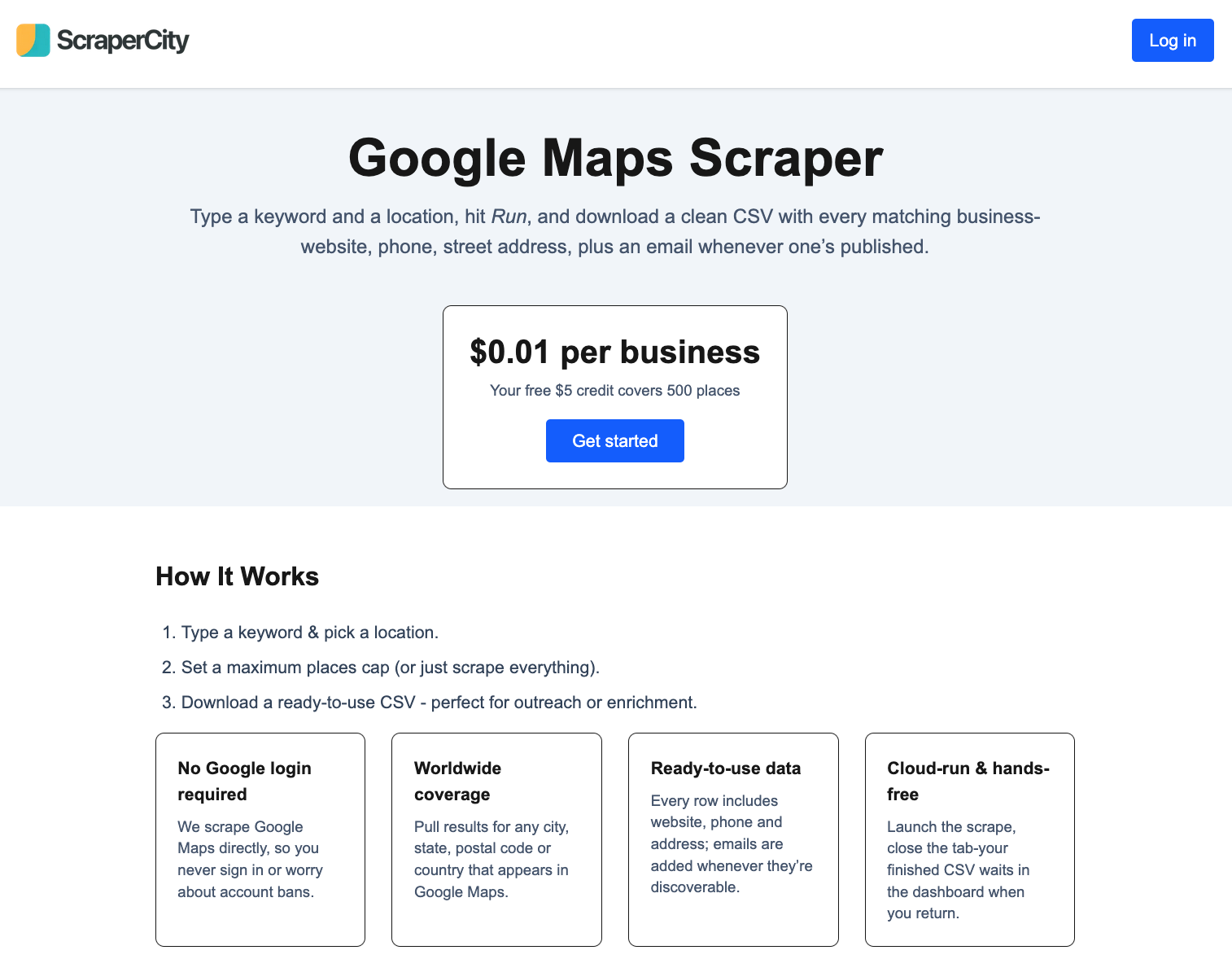
Every business depends on leads, but the quality and accuracy of those leads determine how well a company can grow. Searching for potential clients manually is slow, inconsistent, and limits how far outreach can scale. Smart companies now rely on Google Maps Scraper tools to automate their data collection, transforming how sales and marketing teams identify opportunities and engage prospects with precision. These tools help organizations find relevant contacts, organize information, and convert raw data into actionable leads faster than traditional methods.
How Automated Scraping Supports Modern Prospecting
Modern prospecting requires speed, relevance, and scalability. A Google Maps Scraper acts as a powerful engine that scans Google Maps for public business information, gathering details such as company names, phone numbers, addresses, websites, and categories. Using it effectively allows marketers to extract business leads from Google Maps without manual searching, ensuring that outreach lists are current and targeted. By collecting structured information directly from one of the world’s largest business databases, teams can focus their time on building relationships rather than gathering data.
Benefits of Using Google Maps Prospecting Software
The most noticeable advantage of using Google Maps prospecting software is the ability to gather accurate contact information within minutes. Instead of navigating endless listings and copying data manually, automated tools handle the entire process seamlessly. These solutions offer exceptional data accuracy, eliminating duplicate or incomplete entries. They also enable hyper-local targeting, allowing users to filter businesses by specific cities, neighborhoods, or categories. With easy export options, marketing and sales departments can instantly integrate the gathered information into CRMs or spreadsheets for campaign use.
The Strategic Value of Business Intelligence from Google Maps
Lead extraction is not only about collecting contact details. It’s also about identifying trends, understanding local markets, and uncovering growth opportunities. A Google Maps data enrichment tool can provide insights into which regions have the most potential customers or which industries are most active in a specific area. This allows decision-makers to plan expansion strategies, design personalized marketing campaigns, and allocate resources more effectively. The ability to combine real-world mapping data with customer analytics gives businesses a strategic edge that manual research cannot match.
Choosing an Effective Google Maps Scraper
When selecting a tool, consider its ability to provide clean, well-structured data at scale. A reliable automated business contact extractor should allow users to apply filters based on geography, category, or keyword. It should also support batch exports to ensure data integration is effortless. Scalability and automation are vital for organizations managing high-volume prospecting campaigns. A strong scraper should minimize interruptions, bypass typical scraping challenges, and consistently deliver accurate results that fuel long-term business growth.
Why Automation Outperforms Manual Research
Manual research often leads to incomplete, inconsistent, or outdated information. Automated scraping tools, on the other hand, maintain speed and accuracy even when processing thousands of records. Sales professionals gain access to larger datasets without compromising quality, enabling them to identify patterns across industries or regions. This automation not only saves time but also ensures teams work with verified and up-to-date information, significantly improving the quality of outbound campaigns and conversion rates.
Real Applications in Marketing and Sales
Companies of all sizes use these tools to scale their lead generation efforts. A marketing agency might use local business targeting tools to compile lists of potential clients in specific regions for outreach campaigns. A B2B sales team might extract contact information for service providers or distributors within a target industry. Data analysts might combine extracted results with other data sources to identify patterns in customer behavior or competitive density. These practical applications show that Google Maps scraping is not just a technical shortcut—it’s a strategic asset for market intelligence and expansion.
Why ScraperCity’s GMaps Scraper Deserves Attention
Among the available solutions, ScraperCity’s GMaps scraper provides exceptional performance and reliability. It offers intuitive controls, adjustable filters, and robust data accuracy, making it ideal for teams seeking to automate business prospecting. With features designed for high-volume scraping and consistent output, ScraperCity helps organizations scale their efforts efficiently and securely. For companies seeking dependable software to streamline their workflow, this tool delivers the perfect balance between speed and precision.
Integrating Google Maps Data into Your Growth Strategy
Extracted data should never sit idle. The true value comes when it is transformed into actionable insights. Uploading scraped leads into CRM platforms allows marketing automation, personalized email outreach, and performance tracking. Combining mapping data with internal analytics helps businesses measure campaign results geographically, optimizing local advertising spend and territory management. The result is a more intelligent approach to sales that prioritizes opportunities based on verified data rather than assumptions.
Conclusion
A Google Maps Scraper is no longer just a convenience; it has become a competitive advantage for businesses committed to smarter lead generation. Automating data extraction empowers teams to build targeted outreach lists, analyze local market conditions, and refine their marketing efforts based on accurate intelligence. By adopting a reliable scraping solution like ScraperCity’s GMaps scraper, organizations can elevate their approach to prospecting, achieve better accuracy, and make data-driven decisions that improve conversion rates and overall growth performance.
YOU MAY ALSO LIKE: travelsfornow.com: Your Guide to Last-Minute & Local Trips